Yesterday, one of our co-founders sent me a GTM engineer job description from a San Francisco startup. The company was looking for someone who could:
- Score accounts against the ICP and route leads.
- Own the data models and the sync logic.
- Write production Python and TypeScript.
- Design prompts, run evals, handle model failures.
- Ship code with logging, monitoring and retries.
- Find repetitive work, test fixes, measure adoption.
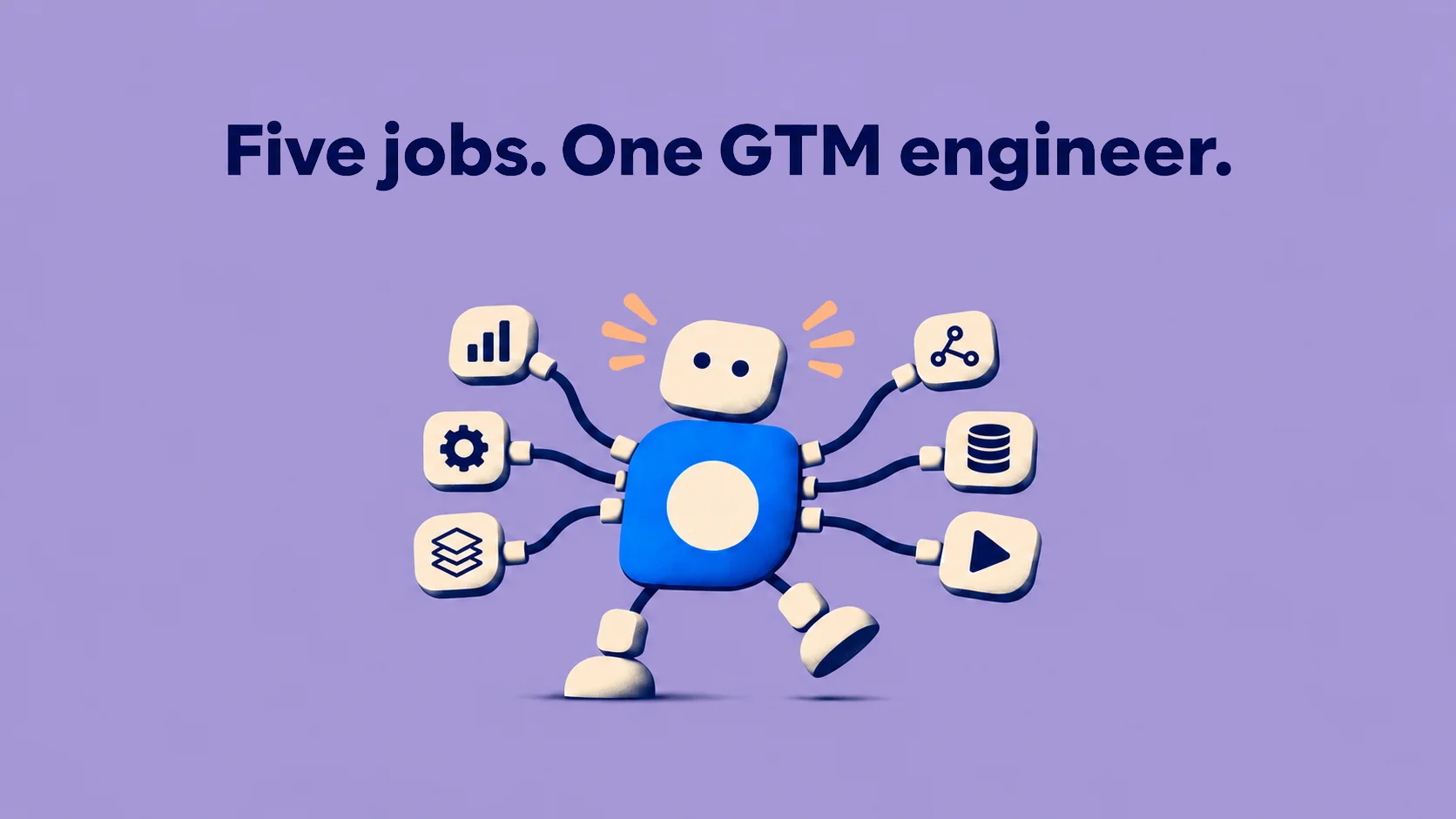
The responsibilities covered multiple positions: RevOps. Data engineer. Software engineer. AI engineer. SRE. Product manager.
The seniority they were looking for? Junior. One year of experience.
So basically, you’re replacing six experts with one junior. But it's going to be okay, thanks to AI.
That's what recruiters call a unicorn hire. (For the record, the median posted salary for GTM engineer roles was about $155K in the last week of October, according to GTME Pulse. Not exactly junior money.)
What is a GTM engineer, on paper?
A GTM engineer builds and runs the systems behind a revenue team: the data, tools, automations, and now, AI agents, to turn a go-to-market strategy into action. It's a real job, and an incredibly valuable one. What's broken is the job post.
This job post is one of thousands of examples of a growing mandate for revenue teams: "roll out AI, and build it yourselves." It’s founded on one belief: AI makes expertise optional. The unicorn job post is just what that belief looks like on paper.
The 20-minute demo problem
On the Sourcery podcast, Klarna's CEO Sebastian Siemiatkowski described how his job had changed. He used to brief engineers in a meeting room and wait weeks for a prototype. Now he builds it himself with AI, in about 20 minutes.
Any exec who has dabbled in AI has had a similar enlightening moment.AI makes this easy. It sets the bar.
But how do you go from a prototype to a rollout across hundreds or thousands of daily users?
Most companies don't. In Deloitte's 2026 State of AI in the Enterprise survey, only 25% of respondents had moved 40% or more of their AI pilots into production. That's the AI adoption challenge that gets left out of demos: most pilots never reach production.
The good news is we’re getting slightly more realistic; we've mostly moved past "I'll rebuild my CRM in a weekend." Yet the assumption stays: "If I can build something that looks production-ready in 20 minutes or a few hours, why can't my ops team build everything, given a few weeks?"
This 20-minute wow effect makes you feel you're about to build something huge. But between that demo and a tool reps use every day, there's a lot of work, and each piece takes a different expert.
Remember our GTM engineer unicorn? The sad truth is, as much as we want to believe it, unicorns don't exist. So organizations don't get instant, flawless architecture with the shake of a wand. They get a dysfunctional house. The lights go off every night. The energy bill explodes. Brown water comes out of the taps. The rooms don't fit how anyone lives. And the family still sleeps at the old place.
Each problem comes from a role that never got hired.
The infra job: why can't your AI agent live on a laptop?
Because a laptop closes at night, and a team needs an agent that runs every day.
Every AI project starts on someone's laptop: a script, a Claude project, a scheduled prompt. It works. Everyone's impressed. Then that someone closes their laptop and goes home. So does the agent.
The next morning, there’s no brief, no alerts. Just reps asking where their summary went.
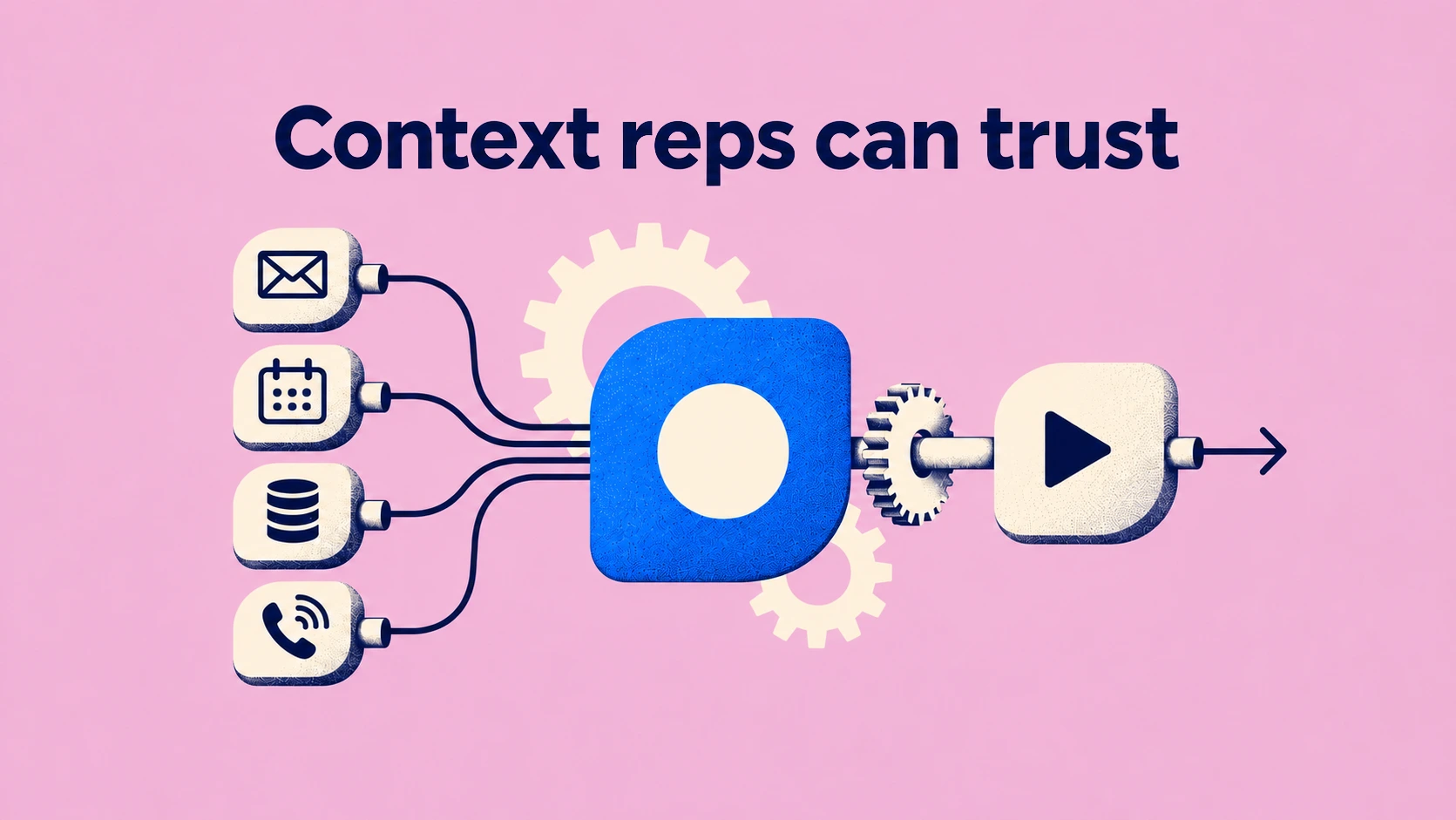
To serve a team, your agent needs real infrastructure: servers, schedulers, retries, logs, monitoring, and something that tells you a run failed at 3 am, and why.
RevOps configures tools. They’re not supposed to babysit servers (that's engineering work). By the way, it was in the job post too!
And once your agent runs every day, you pay for every run.
The AI engineering job: why do AI token costs add up so fast?
Because a rollout multiplies everything.
A pilot with a few reps and low adoption doesn't cost much. Then you roll it out to the whole team.
Every run reads emails, call transcripts and CRM history, multiplied by the number of reps, accounts, and days. One month later, your CFO discovers what a token is. Not in a good way.
Most of those tokens go to fetching data, so you start optimizing: Which model for which task? What to cache? What to load, what to skip? You finally get it right. Then a new model comes out, and you start over. So you benchmark, again and again, on your own data and your own use cases.
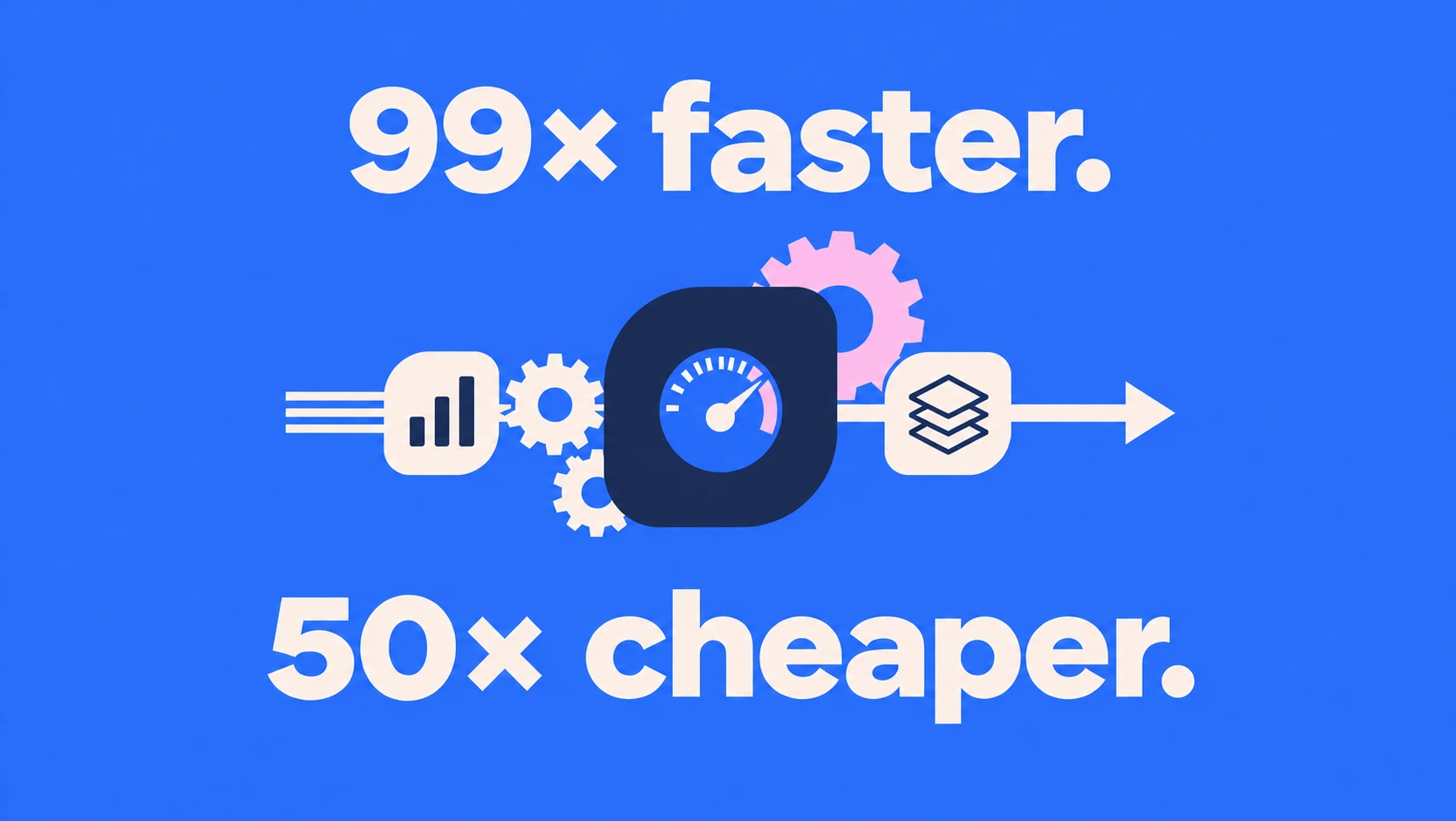
We've run this test several times ourselves. Same task, same data. On one side, a raw agent. On the other, a proper knowledge layer and the right tools. At the median, the second one uses about 30 times fewer tokens. In one test we published, it was about 50 times fewer, for output that was just as good, if not better.
That's a full-time job. It's called AI engineering. It's in the job post too, and your GTM engineer is expected to get it right, along with their 5 other jobs, with less than a year of experience. One of the many perks of being a unicorn.
The data job: why won’t your CRM data ever be clean?
Because the real story of a deal rarely makes it into the CRM. In the customer CRMs we connect to, 22% of open deals have a close date that's already in the past.
Every AI vendor promises to work "on top of your data." But have you looked at your data lately?
Next steps from three weeks ago. Close dates that never move. The real story is hidden across emails, calls with managers, and Slack threads that never make it into your CRM.
And honestly, that's fine. You hired reps to close deals, and every minute they spend reading or typing is a minute they don't sell.
But it means your CRM data quality will never be where a model needs it. Keeping it usable takes pipelines, sync logic and deduplication, every single day. That's data engineering.
And AI amplifies bad data. Feed it stale data, and it answers with total confidence and total wrongness. A rep only needs one of those to stop trusting the tool for good.
Say you fix all that. Congrats. Now your reps still have to actually want to use your AI product.
The product job: why do AI demos die after day one?
Because a demo is not a product. RevOps know the reps' day better than anyone. But building something they'll open every morning is a different skill.
That's product work: watching how reps really work (not how the process says they’re supposed to work). Shipping, seeing what nobody opens, cutting it, trying again. The wow might come on day one. But a tool worth opening comes after dozens of iterations.
And when everyone builds their own, the stack fragments. An agent in Slack. Another one in the CRM. A dashboard somewhere nobody remembers. Reps had twelve tabs open. Now they have thirty.
A VP of Revenue we spoke with summed it up: he didn't want agents spread across four different systems. Neither do his reps.
Add product manager to the unicorn's list. Still junior, of course.
And even a great tool is useless if nobody changes how they work.
The job that wasn’t listed: AI change management owner in revenue teams
RevOps and sales managers should own AI change management. Despite all the other roles in the unicorn job post, this one was missing.
In Default's H1 2026 report on AI in revenue operations, nearly one in four organizations had no clear owner of AI adoption.
Reps have habits. They've sold the same way for years. A new tool doesn't change that. Their manager does.
If pipeline reviews still run on the old spreadsheet, the new tool is optional. And optional means dead.
So how do you get a sales team to actually adopt a new AI tool? Run the pipeline review in it. Have managers open it in every 1:1. Train a champion in each team. Measure usage from day one, then watch who drops off, and why, for months.
Luckily, this one is RevOps' home turf. It's the job they already do. But it takes time, and time is exactly what the other four jobs ate.
The five jobs inside one GTM engineer job post
| Job | What it takes | Sign it's missing | Own it or buy it |
| Infra | Servers, schedulers, monitoring | The morning brief didn't arrive | Buy |
| AI engineering | Model choice, caching, benchmarks | Your CFO asks what a token is | Buy |
| Data | Pipelines, sync, deduplication | The AI quotes a close date from last quarter | Buy |
| Product | Discovery, iteration, usage tracking | A great demo nobody opens | Buy the tooling, own the calls |
| Change management | Champions, training, managers in the loop | Pipeline reviews still run on the spreadsheet | Own |
Where did the expertise go?
Five jobs. Each one traditionally performed by a full-time expert. AI didn't make any of them disappear. The problem is, execs and managers assume that anyone using any AI system can now do them all. But with the right, purpose-built tools, AI can empower RevOps with the expertise to build the system that’s right for them. SaaS isn't dead. We've entered the era of build. That doesn't mean you can hand your RevOps Claude Code or Cursor and expect them to turn into a unicorn overnight.
For years, software sold you a house already built, with rooms that never quite fit. Now RevOps wants to build its own. Good. But nobody builds a house alone. It takes materials: a data layer that copes with a messy CRM, one shared understanding of every deal, infrastructure that runs while you sleep. And trades: models tuned so your CFO never learns what a token is, monitoring that catches the 3 am failure, and adoption built in. Usage measured from day one. Agents that show up where reps already work, in Slack or Salesforce, so nobody needs yet another tab.
You buy those. Then you build the house your team actually needs.
Some smart people say the opposite. Kyle Norton, CRO at Owner.com, argues you shouldn't buy your GTM brain. He's right about the brain: how your team sells, your playbooks, what a good deal looks like. That part is yours to build. What you buy is everything that keeps it running underneath.
That's the new era of software. No "build or buy" anymore. It's buy to build.
But even with this new paradigm, RevOps doesn’t do the job of 5 experts; it orchestrates how the team sells, what gets built, and the change that gets everyone moving.
You can't hire a unicorn. But you can give your RevOps the tools that actually make AI systems work for revenue orgs. That's exactly what we're building at Pearl: a System of Action on top of your CRM. Request access to discover how to unlock your GTM unfair advantage!
FAQ
What is a GTM engineer?
A GTM engineer builds and runs the systems behind a revenue team: data, tools, automations, and now, AI agents. On paper, it's one role. In many job posts, it's five or six.
What does a GTM engineer do?
Scores and routes accounts, keeps CRM data in sync, builds automations, and increasingly, AI agents. The good ones also measure whether reps actually use what they build.
Why do AI projects fail in revenue teams?
The model is rarely the problem. Between a demo and daily use sit five jobs: infrastructure, AI engineering, data, product and change management. Most teams staff one.
How do you get a sales team to adopt a new AI tool?
Make it part of how the team already works: run pipeline reviews in it, have managers use it in every 1:1, train a champion per team, and measure usage from day one.
Should RevOps build its own AI agents?
Build what's unique to how your team sells. Buy what every team needs: infrastructure, model tuning, a data layer and adoption tracking.
Who owns AI change management in a revenue team?
RevOps, with sales managers. No tool replaces a manager who uses it in every 1:1.